
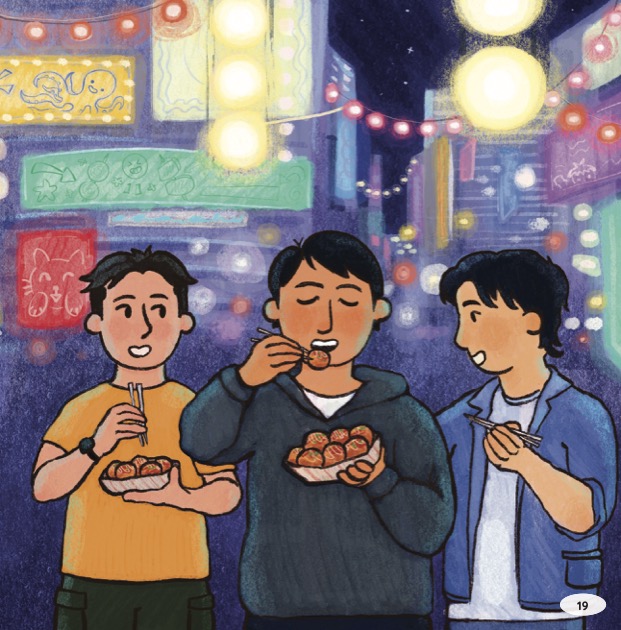
Let’s journey to Japan to learn about Takoyaki. Takoyaki, also known as octopus balls, is often featured at street festivals, fairs, and sporting events in Japan, where it is enjoyed as a popular street food.
History and Cultural Significance
Takoyaki debuted in Osaka, Japan, in the 1930s. It started as a simple dish made with wheat flour batter and diced octopus, cooked in specially designed molds. As economic conditions improved in post-war Japan, Takoyaki gained popularity in street food markets as a quick, tasty, and affordable snack that met the needs of the busy post-war population. Today, it is widely regarded as a culinary symbol of Osaka culture.
What Is Takoyaki?

Traditional takoyaki is prepared from a batter of wheat flour, dashi (a type of broth), and diced or minced octopus (tako), along with green onions, pickled ginger, and tempura scraps (tenkasu). It is typically served hot, drizzled with takoyaki sauce, and topped with katsuobushi (dried bonito flakes) and aonori (dried seaweed flakes).
Takoyaki is made in a takoyaki grill, or “takoyaki-ki,” a specialized cast-iron pan with domed molds that give the balls their unique round shape. It is central to the cooking method and helps create takoyaki’s crispy exterior and soft interior.
Let’s Learn about Japan and the Japanese Language
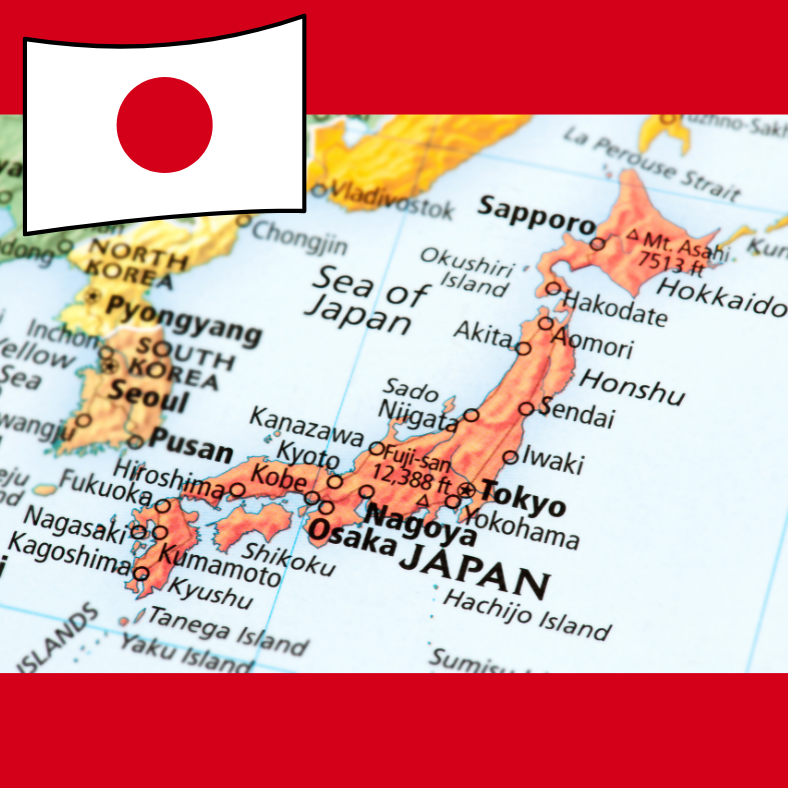
Japan is a curved island nation (archipelago) located in East Asia, in the northwest Pacific Ocean. It is east of the Korean Peninsula, China, and Russia, stretching from the Sea of Okhotsk in the north to the East China Sea and Taiwan in the south. As an archipelago, it consists of more than 14,000 islands (due to updated mapping in 2023), with four main islands: Hokkaido, Honshu (the largest and home to Tokyo), Shikoku, and Kyushu.
Dense forests and mountainous terrain cover 70 percent of Japan, including the Japanese Alps. The country also has many active volcanoes, with Mt. Fuji being the most famous. Major cities are along the coastlines and in flat areas. Japan’s climate ranges from a humid continental climate in the north to a humid subtropical climate in the southern islands.
Japanese is spoken by nearly the entire population of Japan, totaling around 125 million speakers worldwide. Besides Standard Japanese, called Nihongo, there are lesser-known Ryukyuan languages spoken in Okinawa and the nearby Ryukyu Islands. Japanese uses three writing systems: hiragana, katakana, and kanji. Today, Japanese is written left-to-right, but vertical writing is still used in literature and traditional media.
To learn more about the Japanese language, visit our blog post.
Bilingual Japanese Books and More
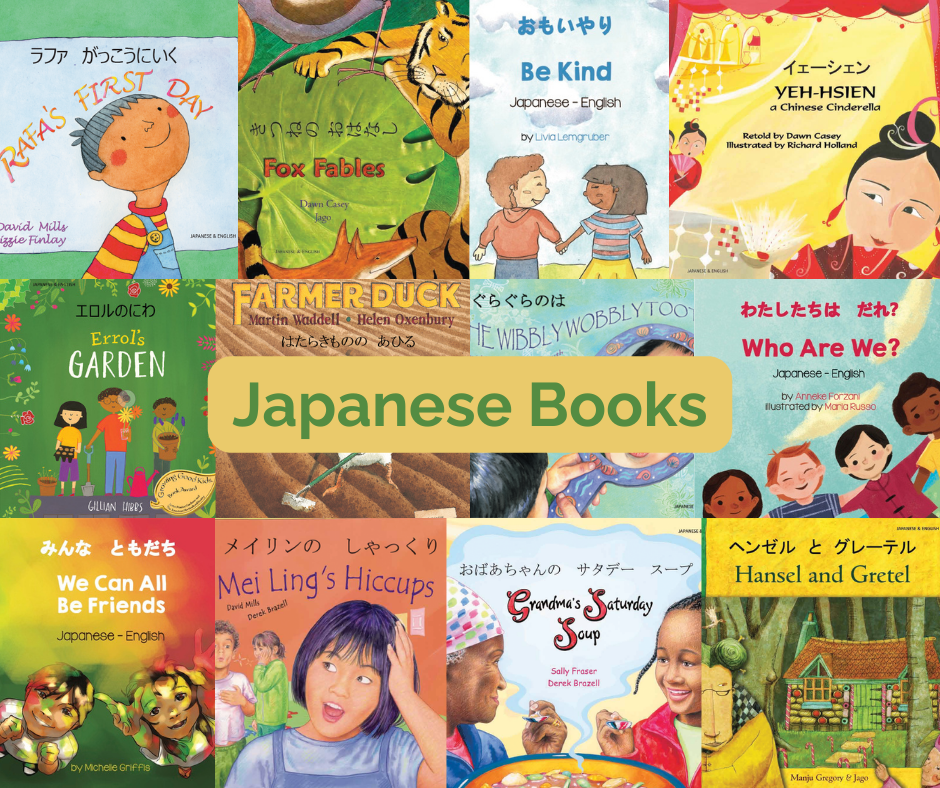
Language Lizard offers many bilingual Japanese-English titles, both fiction and nonfiction, that will appeal to readers of all ages. Visit here to explore all the Japanese-English titles currently available.
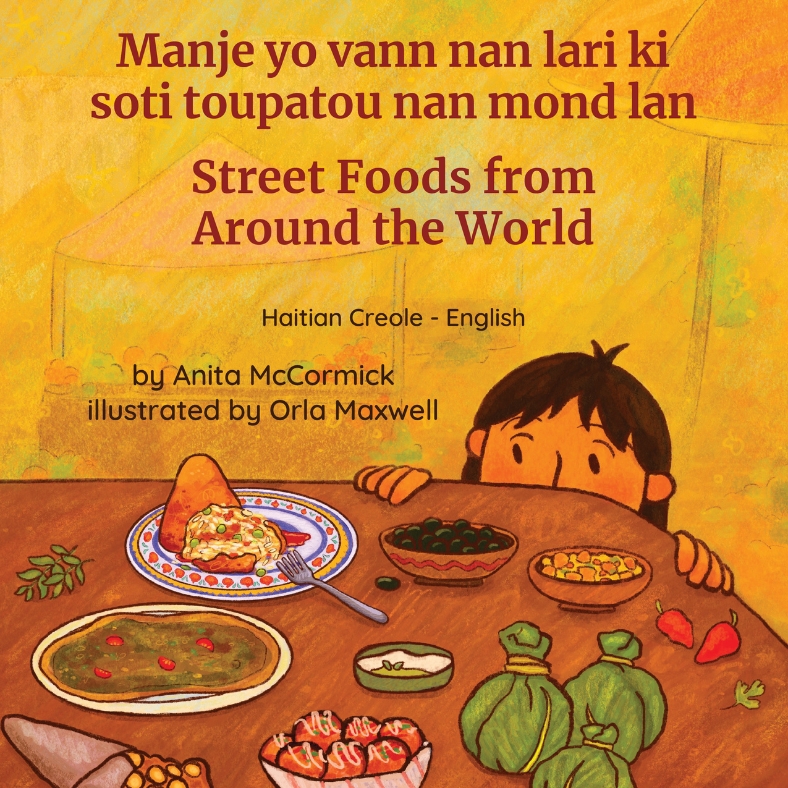
Street Foods from Around the World is a delightful journey from the shores of Malta to the bright lights of Japan’s cities and beyond, exploring some of the most well-known sweet and savory street foods, including Takoyaki. This title includes a lesson plan, more detailed information about the foods featured in the book, audio, and printable activities. Available in English-only and many bilingual editions.